1994 Toyota GR Supra: The Iconic JDM Classic
The Toyota Supra, a sports car icon, reached new heights in its fourth generation between 1993 and 2002, with the 1994 model year being a standout. The 1994 Toyota Supra, often referred to as the A80, is cherished by automotive enthusiasts worldwide for its perfect blend of performance, style, and reliability.
The Supra's success story is deeply rooted in its heritage. Its lineage can be traced back to the 1978 Toyota Celica Supra, making it a testament to Toyota's enduring commitment to creating exhilarating sports cars. The 1994 model was a paragon of this heritage, embodying the spirit of its predecessors while pushing the boundaries of what was possible in a Japanese sports car.
Design and Aesthetics
The 1994 Supra's design was a testament to its aggressive performance capabilities, wrapped in a sleek, aerodynamic body. The fastback silhouette, often dubbed the 'απ 2×2', was a sharp departure from its predecessors,Donning a prominent rear wing and large alloy wheels, the 1994 Supra exuded sporting prowess.


Step inside the 1994 Supra, and you're greeted by an interior that was both driver-focused and luxurious. The dashboard was Booking, and the Recaro sports seats were designed to hold the driver firmly in place through the most demanding corners. Yet, despite its performance-oriented nature, the Supra didn't skimp on creature comforts, offering features like power windows, climate control, and a high-end audio system.
Engine and Performance
The heart of the 1994 Supra was its 2JZ engine, a twin-turbocharged inline-six producing 276 horsepower and 317 lb-ft of torque. This engine was renowned for its reliability and tunability, allowing owners to extract far more power with relative ease. The Supra could accelerate from 0-60 mph in a mere 4.6 seconds, making it one of the fastest cars in its class at the time.


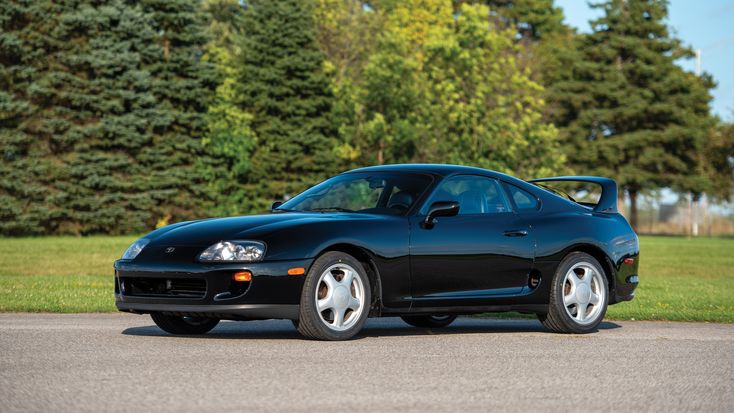
The 1994 Supra's engine was mated to either a five-speed manual or a four-speed automatic transmission, sending power to the rear wheels. This classic rear-wheel-drive layout contributed to the Supra's legendary handling, making it a joy to drive on both the open road and the racetrack.
Technological Innovations
The 1994 Supra was ahead of its time in terms of technology. It featured an optional наctive differential, which used a multi-plate wet clutch to reduce wheel spin and improve traction. The Supra also offered an advanced, self-healing paint finish that could repair minor scratches and swirl marks on its own.
But perhaps the most standout feature was the Supra's Knock Sensor-less Ignition System (KSIS), which eliminated the need for a knock sensor. This not only simplified the engine's design but also made it more reliable and tunable, a testament to Toyota's engineering prowess.


Cultural Impact and Legacy
The 1994 Toyota Supra's impact extended far beyond the automotive world. It became a cultural icon, featuring prominently in films like 'The Fast and the Furious' and video games like 'Need for Speed'. Its iconic design andJs caught the imagination of fans worldwide, and it continues to be a highly sought-after collectible.
The Supra's impact on the automotive industry was profound. It set the standard for performance, handling, and reliability in the sports car segment, influencing a generation of cars that followed. Its legacy can be seen in Toyota's modern sports cars, like the GT86 and the GR Supra, which pays homage to the A80 Supra's spirit.
The 1994 Toyota Supra stands as a testament to Toyota's commitment to creating exciting, innovative sports cars. With its stunning design, remarkable performance, and advanced technology, it set a new benchmark in the sports car segment. Today, it remains a cherished icon, inspiring a new generation of automotive enthusiasts and drivers.

Related Articles

1994 Toyota Supra: Classic Red Marksman Edition
The 1994 Toyota Supra, especially in its classic red hue, is an iconic symbol of automotive engineering and enthusiast culture. A pinnacle of eighth-generation...

Black 1994 Toyota Supra: Classic Sportscar
The 1994 Toyota Supra, a legendary car known for its performance and pop culture appearances, remains a fan favorite among auto enthusiasts. This iconic sports...

1994 Toyota Supra Headlights: A Comprehensive Guide for Restoring Classic Lights
The Toyota Supra, a definitive player in the sports car realm, captured the hearts of enthusiasts worldwide when it was introduced in the mid-1990s. Among its...

1993 Toyota Supra Body Kit: Transform Your Classic Sports Car
The 1993 Toyota Supra, often hailed as a timeless sports car icon, underwent significant design improvements, one of which was the introduction ofaftermarket...

'1998 Toyota Supra on eBay: Classic JDM Find!'
The Toyota Supra, a sports car icon, has left an indelible mark on pop culture, and the 1998 model is a special iteration that continues to captivate...

Unveiling the 1994 Toyota Supra's Lightning Speed: How Fast Can It Go?
The 1994 Toyota Supra, an iconic sportscar, holds a special place in the automotive world, not just for its sleek design, but also for its commendable...